March 13, 2026

Buildings up to 100' wide and 24' high now available.
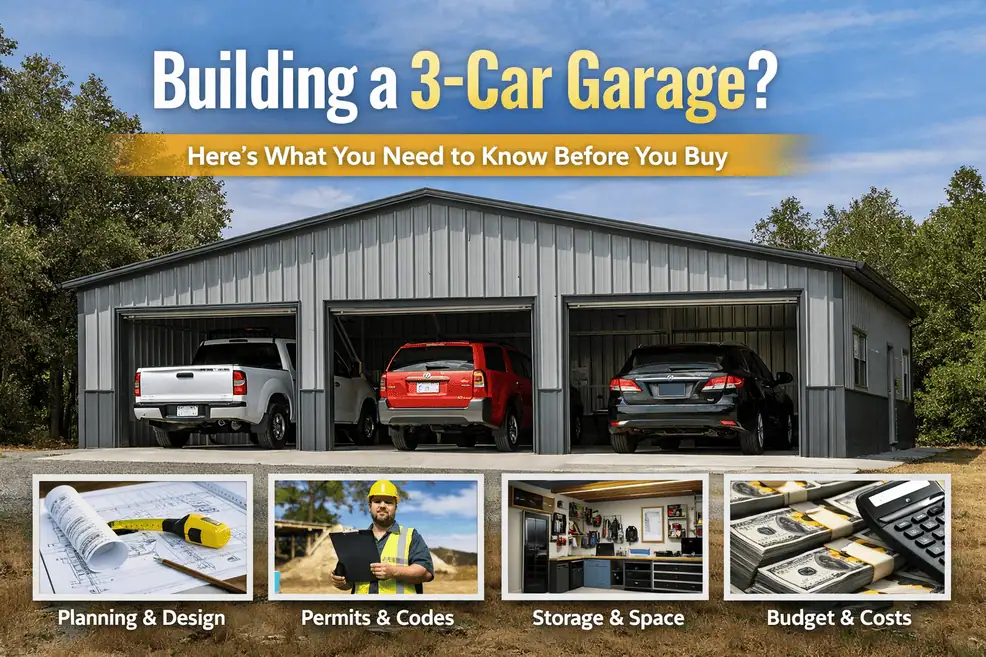
A three-car metal garage gives you a ton of flexibility, but that also means you’ll need to think through the overall layout, door setups, and actual garage dimensions instead of guessing. After all, you don’t want to realize halfway through the build that your truck mirrors smack the wall or the mower has nowhere to park.
So, before you commit, it’s worth stepping through layout options, foundation choices, permits, and some of the decisions that affect your day-to-day use. If you’re still early in the planning process, this is the perfect stage to get things right.
The flow of your three-car garage starts with how those vehicles sit inside the structure. You’ll be able to choose between:
All three vehicles parked shoulder to shoulder. Easy to visualize, easy to work with. This setup takes more width, but it’s usually the most convenient for garage door configuration and day-to-day driving. Bigger trucks and SUVs appreciate this layout.
Two up front, one right behind. Handy if you’ve got one vehicle that only leaves on weekends, or you’re working with a narrower lot. Saves width, which can save money. People often overlook this option, but it’s one of the most efficient uses of space.
If your property runs deeper than wide, front-to-back is surprisingly practical. Vehicles stagger inward, slightly offset, almost like parking in a long private bay. Perfect if your driveway already points this way.
There’s no fixed size for a metal garage, because it depends on whether you’re storing compact cars, full-size trucks, or a mix.
| Length | Width | Height | Best Fit |
| 26-30 ft. | 20-34 ft. | 9-10 ft. | Tight for 3 cars: Works well for smaller sedans |
| 30-36 ft. | 24-30 ft. | 10-12 ft. | Daily drivers with additional room for storage |
| 36-42 | 30-36 | 12+ ft. | Great for trucks, SUVs, RVs and larger vehicles |
You’ll also want to account for door swing space. You don’t want to tap someone’s bumper every time you grab groceries. When in doubt, opting for a bit more room pays for itself.
Door choices shape the building, how it can be used, and how it looks from the curb. Some of the most common options include:
These come in different widths. Trucks need more clearance, compacts less. A three car garage often uses three roll-up doors, but two wider doors can also work if you’re planning a tandem layout. The amount of framing reinforcement changes based on how those door openings are arranged.
Walk-in doors let you pop in for tools without raising the big doors. They also influence insulation placement, electrical panel access, and where windows can sit.
People get excited about the building, but the ground underneath makes or breaks the project. To get the best results out of your building, star with the foundation:
Trees, dirt, old gravel will need to be moved out of the way. Installation crews will need adequate space to work around the structure.
You’ll want to know the composition of your soil and what prep you’ll need before laying the foundation.
Concrete is the gold standard if you’re keeping heavy gear inside. But if you’re designing an agricultural structure or a simple storage building, soil, gravel, and asphalt work fine.
Local rules can vary wildly. It’s not fun paperwork but skipping it can stop everything fast.
You’ve got several choices when it comes to structure type. Some shine better than others, but in the end it’s up to you and your project to decide what works best:
Made from pre-engineered metal buildings, these don’t rot, warp, or invite termites. Better long-term durability. Interior framing is open and easy to insulate. Lower upkeep.
Good-looking and familiar, but they need more maintenance. Paint, siding, and warping all take attention over the years. Not usually the most cost-effective three car garage.
Prefab keeps the price down and speeds installation. Custom lets you dial in the details-garage door configuration, roof style, ventilation.
Certified steel buildings aren’t just put together. They’re engineered with specific load ratings for your area. If you get heavy snow, the roof is designed for that. If hurricanes are common, the anchoring and bracing reflect it. Building officials want those stamped design numbers, so thinking ahead here saves trouble later.
Garages don’t stay dry and comfortable by accident. Ventilation keeps air moving, insulation helps regulate temperature, and both help reduce condensation.
Adding ridge vents, gable vents, vapor barriers, and the right type of insulation can prevent a lot of frustration and keep your building cool.
Prices for triple-wide metal garages swing depending on a few predictable variables, such as:
The bigger the building, the more material and more labor.
Regions with snow or wind loads need added strength.
A vertical roof usually costs more but handles weather better.
Concrete costs more but gives the best long-term performance.
Windows, vents, insulation, interior partitions.
Some towns barely charge; others surprise you.
Every building project is destined to have a hiccup or two, but with the proper due diligence, you can keep those to a bare minimum. Some of the biggest pitfalls include:
Everyone underestimates space. The mower, ATV, bikes‚ they show up later, and will need space of their own.
A dry foundation means a long-lasting structure.
Avoiding permits slows everything down and can cost you thousands in penalties.
Electrical and plumbing are easier to include before the slab pours.
When you’re buying a 3-car garage, you want dependable guidance-someone who’s worked with real world job sites. At Garage Buildings, we help you plan the right garage foundation, make sense of local wind and snow requirements, and tune the layout to fit your way of life.
We supply certified steel buildings that are engineered to match your region’s conditions. Whether you need a deeper layout, a wide front entry, or larger garage dimensions for trucks, we fine-tune every detail and deliver results that last.
Want to know more about our range of custom metal garages? Call us at +1 (888) 234-0475 and we’ll walk you through the process from beginning to installation and beyond.
It is fast and easy. Get your instant quote today!