March 13, 2026

Buildings up to 100' wide and 24' high now available.
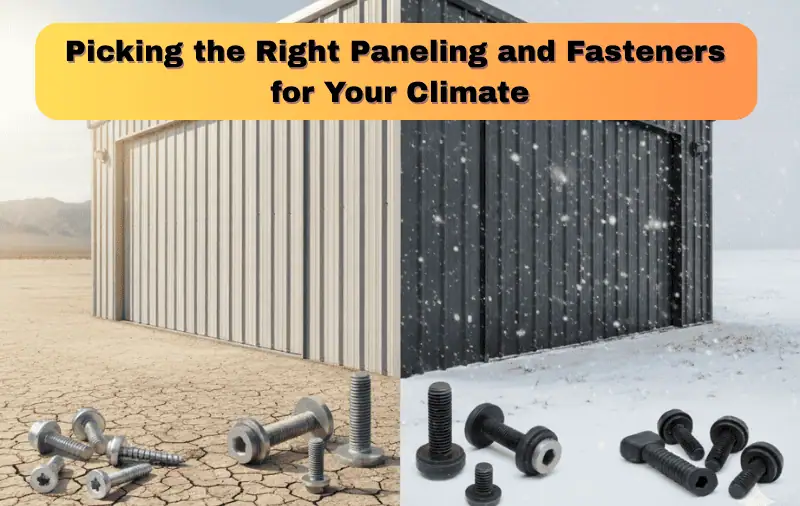
The real workhorses in steel buildings are the panels and fasteners. They’re the parts that actually take the hit when the weather rolls through. Whether from wind, snow, or rain, they all test how tight those pieces hold.
Different climates ask for different setups. What holds fine in a dry area might rust faster near the coast. The trick is matching what you use with where you live and knowing what to look for. It’s those small details that decide how long your building actually lasts.
In this blog, we’ll explore the role of paneling and fasteners in greater detail and show you why small choices can have huge results.
Every region throws its own challenges at a metal building. Some deal with heavy snow, others with brutal heat or steady wind. Each one wears on steel in a different way.
The weight of snow adds up fast and can cause immense stress to the frame. Stronger panels and tight fastener spacing help spread the load and stop sagging before it starts.
Wind can be tricky. It pushes hard, then pulls even harder. Uplift is what tears panels loose if screws aren’t gripping deep or spaced right. Wind-rated fasteners and thicker metal stop that kind of failure.
Metal doesn’t stay still in the sun. It expands, contracts, and flexes a little every day. Over time, that motion can back screws out or stretch openings. Using coated fasteners and flexible washers keeps everything sealed tight.
Moisture sneaks in where you least expect it. Once rust starts, it spreads. That’s why coastal or damp areas need stainless or zinc-coated fasteners and galvanized panels since they stop corrosion before it ever begins.
Panel thickness changes everything. “Gauge” is the word to remember. The smaller the gauge number, the thicker the steel.
Light, affordable, and common for most residential projects. Works fine in areas with calm weather, but in a snow belt or wind zone, they can flex more than you’d like.
26-gauge is heavier and stronger. It holds its shape under stress and is better at resisting dents or deflection. If storms, snow, or wind are part of your normal forecast, this is the smarter choice.
Fasteners don’t get much credit, but they’re what keep your pre-engineered metal building from pulling apart when the weather hits hard. Pick the wrong kind, and you’ll find out fast where the weak spots are.
What really matters?
Stainless or zinc-coated screws fight off rust in wet or salty air.
Those little rubber washers, made from neoprene or EPDM, seal tight around each screw, stopping leaks cold.
You want a screw that’s long enough to grab deep into the frame. Too short and you lose holding power. For high wind environments, the longer the better.
Even spacing of fasteners keeps the load of your structure balanced. If they are too far apart or too few, you could be looking at trouble.
Different climates call for different kinds of protection. The right panel setup can mean the difference between a roof that holds and one that starts leaking after the first big storm.
Our recommendations for tough environments:
26-gauge panels with closer screw spacing handle the extra weight.
Go thicker with corrosion-resistant coatings and interlocking seams to beat wind and salt air. Go with a certified steel building that is rated for the wind speeds in your region.
Reflective finishes help panels stay cooler, reducing stress on the fasteners.
Galvanized or painted steel paired with rust-proof fasteners keeps corrosion under control.
Even the strongest building can run into trouble if a few simple things get missed. A few of the big ones include:
If your paneling is too thin, wind can tear it from the fasteners that hold it down and away from your structure entirely.
The salty air will do numbers on steel building components that aren’t properly coated.
Skimping on fasteners or leaving too much space can weaken your paneling and make it more susceptible to wind damage.
It might save money to opt for a non-certified metal building, but you may pay a heavy price when the next storm rolls in, since it’s not rated against your climate.
At Garage Buildings, every garage, workshop, or storage building we design is made to match the weather where it’s going. We use strong materials and certified engineering techniques to build some of the strongest, most well-put-together structures on the market.
When you partner with us, you get:
Call our experts today at +1 (888) 234-0475 to start designing a building for your climate. We’ll walk you through the entire process, answer your questions, and deliver a structure that’s ready for the world in which you live.
It is fast and easy. Get your instant quote today!