March 13, 2026
If you are considering buying a steel building, whether you be purchasing a steel garage, workshop, carport or even a barndominium, the roof pitch number doesn’t tell the whole story. The roof pitch determines the strength of your building and potential to handle heavy rainfall, snow, wind and its aesthetics.
In this blog, we will decode roof pitch numbers such as 3/12, 4/12, 5/12, and 6/12 and explore what they mean, when to use them, and finally how to decide what roof pitch to use on your building based on your needs and location.
What Is Roof Pitch?
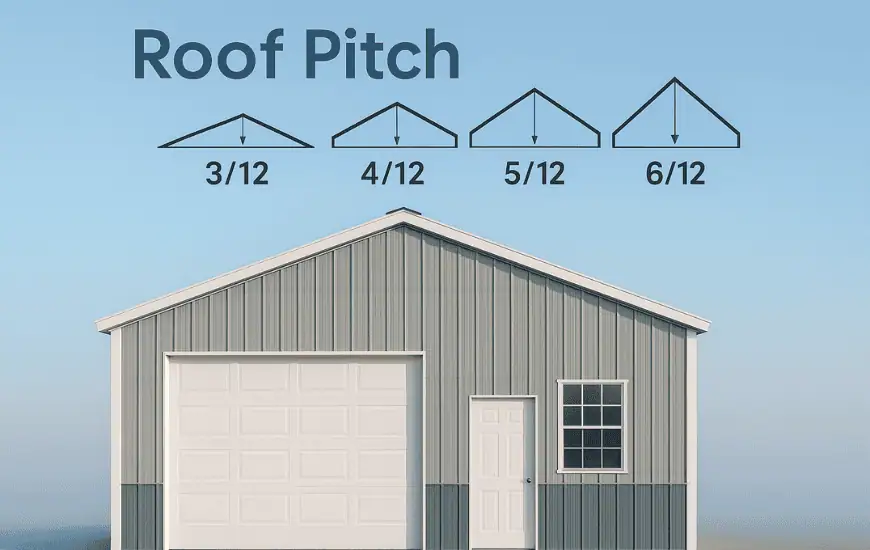
Roof pitch is a way of measuring the steepness of a roof. It represents how much the roof rises vertically for ever 12 inches of horizontal run.
For example:
A 3/12 pitch means that the roof has a rise of 3 inches for 12 inches of horizontal run.
A 6/12 pitch indicates that it has a rise of 6 inches over the length of 12 inches
Roof Pitch Chart

Why Roof Pitch Is Important in Steel Buildings
Roof pitch is a factor in the following about your building:
1. Water Runoff
Steeper-pitched roofs (4/12 or greater) will shed water much faster, keeping the roof free of leaks and/or standing water. Flat roofs (1/12-3/12) will likely have standing water if they’re not sealed.
2. Snow Load Issues
Low-sloped roofs will retain snow and translate to more weight on the roof and deformation if it does not fall off. In colder latitude locations, a 5/12 or a 6/12 pitch roof will shed the snow, allowing for a natural snow and structural load.
3. Wind Uplift
Low-pitched roofs will have less wind uplift but significant potential water management issues. Steeper-pitched roofs will have high wind pressure points but can easily manage significant accumulated rainfall and shed snow if framed appropriately for pitch.
4. Interior Clearance
Steeper-pitched roof systems will give you more interior clearance and effectively provide more attic and storage space, or loft space and taller ceilings.
5. Curb Appeal
A 3/12 pitched roof has a clean single/dual sloped appearance.
A 6/12 pitched roof has a larger profile and will provide a more residential or “barndo” appearance.
Bonus Tip: Pair Roof Pitch with Other Custom Selections
Remember, roof pitch relates to:
Roof style (Regular, A-frame, Horizontal, Vertical)
Overhangs
Color trim
Gutter systems
Adding a roof pitch will add value, protection, and aesthetics to your building for many years to come.
Final Thoughts
Your steel building is an investment. And just like performance characteristics can have an impact on the life and comfort of a steel building, roof pitch is one of the performance characteristics of your steel building. Whether you’re in sunny Texas or snowy Minnesota, when considering a roof pitch for your steel building, you can be comfortable and assured you are covered, literally.
Why Choose Garage Buildings?
At Garage Buildings, we make it easy to select the perfect features for your new structure. You can design your own custom metal building with the right roof pitch for your place and needs using our powerful 3D design tool.