March 13, 2026

Buildings up to 100' wide and 24' high now available.
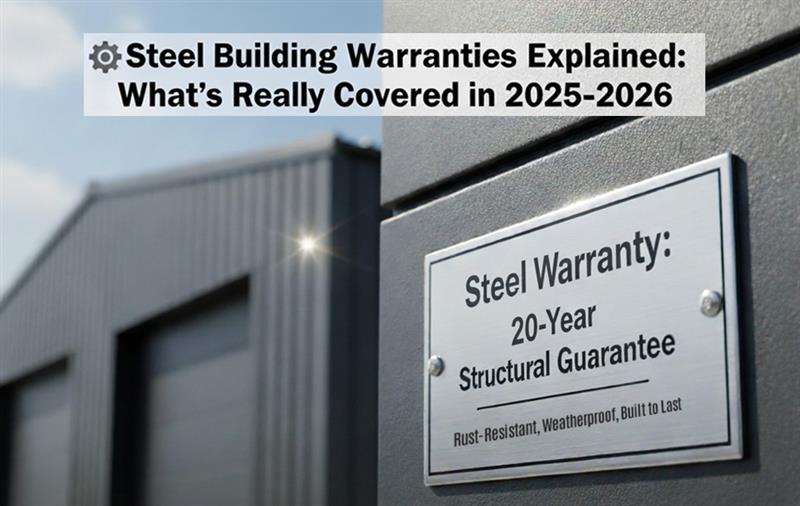
A steel garage is supposed to be the kind of structure you put up once and forget about. But no matter how impressive the design is, there’s always the question: what happens if something goes wrong with the building? And here is where you need a warranty. They’re not always glamorous, but a solid warranty can be the difference between a minor hiccup and a very expensive headache.
In 2025–26, warranties are shifting in America. Some companies are upgrading their warranties, others are tightening up what counts as a defect, and the fine print matters more than ever. Let’s dig into what’s usually covered, what isn’t, and how to read between the lines.
Steel buildings are built to last, but “last” doesn’t mean “perfect forever.” Panels can rust if coatings fail, paint can peel earlier than expected, and sometimes even the strongest frame has flaws from the factory. Without a warranty, those problems land squarely on the owner’s wallet.
If your roof panels start rusting through in ten years on a building that should last forty, that’s not just bad luck, that’s a failure in materials. A good warranty ensures you’re not paying for that mistake.
For homeowners, it’s about protecting an investment they expect to pass down. For businesses, it’s about keeping operations running without surprise repair bills. Either way, warranties create a safety net so you’re not gambling on quality.

Warranties aren’t all the same. Some focus on structure, while others deal more with appearance. Here are the ones you’ll usually see:
A rust-through warranty covers serious corrosion where the oxidation actually perforates the steel, not just a little surface rust.
This warranty protects against fading, chalking, or peeling when finishes don’t hold up.
A paneling warranty is a guarantee that roof and wall panels will maintain their integrity under normal use.
This warranty applies when the building is installed by the manufacturer’s own crew; it covers mistakes in assembly and damage during installation.
Doors, windows, vents, and other extras often have their own separate coverage.
The language in warranties today looks a lot different from what it did even five years ago. Let’s dive into how a few of the trends are showing up now:
Paint warranties have been extended because new coatings can resist UV damage much better.
Corrosion protection has improved, especially for coastal or high-moisture climates where rust is a bigger risk.
Certain states have stricter building codes, and warranties now reflect compliance with those requirements.
More companies are moving toward prorated warranties where coverage lasts longer, but full replacements are less common.
There’s also clearer wording about what counts as a defect versus normal wear and tear, so customers know what to expect.
Despite the fact that metal building warranties are pretty comprehensive, there are still several things that are not covered under their umbrella:
Natural disasters like hurricanes or earthquakes fall under insurance, not warranties.
If your building isn’t cleaned or inspected as recommended, coverage can be voided.
Third-party modifications, such as cutting into panels or adding non-approved features.
Vandalism or intentional damage is not covered by most metal building warranties and will fall to insurance policies for adequate coverage.
Buildings that are installed by third-party install teams are not covered by warranties.
When comparing two different companies, don’t just look at the number of years on the page. Look deeper. You’ll want to keep an eye out for:
Is it a full 30 years, or does coverage shrink after a certain point?
Does it protect the frame or just the paint?
A warranty is worthless if the company isn’t around to honor it.
Past claim experiences tell you how easy (or frustrating) it is to actually use the warranty.
Asking questions is the best way to guarantee that your metal building is properly covered when it comes to warranties. So, to help you make the best buying decision, we’ve answered some frequent questions on the topic:
Answer: Yes, but usually only when rust eats all the way through the metal. Surface rust from scratches or poor upkeep isn’t covered.
Answer: No. Storms, floods, and other natural disasters are handled by insurance, not warranties.
Answer: Panel and paint warranties are now stretching 30-40 years, while structural warranties often sit around 20 years.
Answer: Skipping maintenance, hiring unapproved installers, or making unauthorized modifications are the most common reasons.
It doesn’t matter whether you’re designing a small-scale garden shed to hold mowing supplies or you’re taking on a large commercial operation; performing the necessary due diligence can really pay off in the metal building world. It’s crucial to do the research, find a trusted provider, and explore the warranty options available.
Garage Buildings is proud to be your partner for high-quality metal buildings, metal barns, metal garages, and more. We back our buildings with industry-leading warranties and quality guarantees, so you can rest easy knowing you invested your money wisely. Call us at +1 (888) 234-0475 to find out more about our structures and the warranties that cover them!
It is fast and easy. Get your instant quote today!